Jigar's Laws :
Since the beginning of language, many people have attempted to share each other methods of 'living life.' One of the defining aspects of human sentience is the idea that we are capable of considering meaning and purpose; the greatest meaning or purpose being the one which we have
always tried to find in 'life.' We come screaming out of our mothers, live for some time, and then our life ends—it's no wonder that humankind has been searching for something more in life than that. Our language has been stretched to the very limit of sophistication in its attempt to explain what processes are at work. Because the question is complicated, we assume that there is a complicated answer. Much of art, much of science, much of philosophy, and many other fields have been created to answer these questions in the most convoluted way possible.
I think it's time to look at the question a little more simply.
One of my favorite philosopher is a man named William James. Unlike heavyweights like
Kierkegaard, Kant, or Socrates, James didn't want to tell everyone what to think. That's good: he was a teacher, so he didn't have to tell people what to think. All he tried to tell them was how to think. If I were to ask William James, “What does life mean?” his response would probably be “Whatever helps you live it in the way you want to live it.”
“Arrogance!” some might say. “Useless!” others might cry. James didn't believe that there was
an absolute truth to discover; just that we need to live life as best as we can.
He once said that the only time we ever have to question our own assumptions is when we can't figure out what's going on. If what we know or think we know doesn't match the world around us, we need to find out the mistake and change.
There's one thing which I don't know anything about, and I need to figure out how to understand
it. That's death. The problem with death is that we have no realm of experience. As Rosencrantz puts it in Tom Stoppard's Rosencrantz And Guildenstern Are Dead: “It's silly to be depressed by [death]. I mean one thinks of it like being alive in a box, one keeps forgetting to take into account the fact that one is dead...” We have spent our entire lives being alive. How can we possibly dream of being dead?
Socrates, as Rosencrantz points out, said that if we don't know what death is, we can't be afraid
of it. James would tell us to figure out a way of looking at death which helps us figure out how to live our lives. His conclusion, and I would agree with it, is that believing in a God and Afterlife gives us a positive view of death which not only allows us to continue living, but furthermore gives us a reason to live a good life. Schopenhauer, another philosopher, agreed... until he lost faith in God and became anihilist, believing in nothing.
Ref: Life as Art by Guy Yedwab,Victoria Anderson
Mahavira attained to absoulte knowledge and gave a religious discourse for the first time. In the beginning he said, ‘Uppannei va. vigamei va, dhuvei va (It comes into being, is destroyed and remains steady.)
Bhagvan Mahavira laid the foundation of the great and grand edifice of Jaina philosophy on these three word - utpata (creation), vyaya (destruction) and dhaurya (permanence).
He said : ‘The substance comes into being, the substance is destroyed, the substance remains steady’.
Daily and regular change takes place in every part of the substance. Every moment it comes into being, is destroyed and remains steady also. The original form of a substance remains intact and impartite, but its modes come into being and are destroyed. Creation, destruction and steadiness - this threefold position is called ‘sat (existent). What is ‘sat’ is a substance. For example, gold. The substance is not destroyed. the form of the substance changes but the original substance remains as it is.
We feel that the soul dies. In reality the soul never dies. The soul takes another birth. only its body changes. The soul remains steady as a substance. It is idestructible and eternal.
The word - Jiva, Atma, Cetana - are all synonymous. Jainism states that the soul has been bound by karma since times immemorial. Subtle, deep and detailed discussions about the soul and karma are found in Jainism.
That which has inborn and natural feelings and activity is Jiva (the soul). It is chetana (sentient). That which possesses the four chief instincts - the instinct of eating, the instinct of fear, the instinct of copulation and the instinct of possession (mine-ness) and related activities, is the Jiva (the soul).
The soul has its internal beauty also. It is manifested through experience, This internal beauty of the soul is faultless and formless. It is free from karma. Essentially the soul is not a male, nor a female and nor neuter. The soul has infinite knowledge, infinite perception and unlimited happiness. These are its fundamental qualities. According to Jainism, the incomparable beauty of the soul is enveloped by the cover of karma. The soul reaps fruits of the karmas it accumulates. The soul experiences miseries of life and death because of karma. It enjoys various types of happiness on account of karma. Nobody gives or can give happiness or misery to the soul. It itself is the performer and the enjoyer or sufferer.
To know more:

The meaning of life is to realize that you a divine being who is here to express its divinity in this world. You are more than who you think you are. You are endowed with a spiritual self in addition to your human self. In other words you have a dual nature; a human self that is your body, emotions and mind, which most of us primarily identify with, and a spiritual self that we also call the soul, spirit, higher self or consciousness, which most of us believe in but have no understanding of. We may think that we are a person who has a soul and the point of the soul, if there is any, is to be our “body” when we’re walking around in heaven talking to everyone we know who has died. But the truth is that we are the spiritual self who is using the human self to express itself in this world.
“We are not human beings having a spiritual experience. We are spiritual beings having a human experience.” Pierre Teilhard de Chardin, Jesuit priest (1881-1955)
And what does the soul want to express, in other words, why are we here? The soul wants to use the human self to express the divine qualities of love, wisdom, joy, peace, goodwill, generosity, forgiveness, integrity, harmony, etc. as much and as completely as possible in this world during this lifetime. Truly realizing that you are this eternal, immortal spiritual self who is using the human self is the start of enlightenment and expressing the soul’s divine qualities in everything you say, think and do is the meaning of life and the reason you’re here.
Why is this the meaning of life? This is the meaning of life for at least two reasons. First it’s because through this process divinity finds its full expression. It is brought from potentiality to actuality and is therefore complete. It’s like an inventor who takes an idea from his mind, which would unfulfilled if left there, to a physical product that is used by and benefits another. Second, the increased ability of the spiritual self to express divinity through the human self in this world survives the death of the human self. In other words it’s the soul that learns how to better express itself through the human form during the course of a lifetime. The spiritual self then brings this improved quality of character (the origin of the word character is enduring marks) into its next human lifetime. This is the only thing that endures and survives a lifetime. All things of the human self (e.g. possessions, identity, accomplishments, experiences, etc.) end no matter what the immature, ignorant human self cares to believe. All things of the spiritual self live on because it is an eternal, immortal force created by God.
Please feel free to add your thoughts, comments and questions below. I am also particularly interested in hearing about what you know of the soul…not a definition…not an opinion…but what you really know - your intuitive understanding - of the soul.
Source: www.brendanmcphillips.com
1. They ask brilliant questions.
2. They are fit like athletes (as I mentioned on Twitter the other day "Your #1 business asset is your health".)
3. They are direct/clear/authentic communicators
4. They read (The best leaders have the biggest libraries! Read to Win).
5. They keep journals to record good ideas, lessons learned and dreams to be executed on.
6. The run their own race. Leadership isn't about following the mob and being like everyone else. That's followership.
7. They are ethical - maintaining pristine reputations.
8. They lead where they are planted, deeply understanding that leadership is a way of behaving versus a title on a business card.
Source:Robin Sharma's Blog
If you touch it, feel it.
If you feel it, love it.
If you love it...Give it."
And when the Universe hears, more will be added unto you. NOT AS A REWARD, but because you truly believed... in self, abundance, and love.
-- from www.tut.com

If you want money, you only have to do one thing.
It’s the one thing some of the wealthiest people on the planet
have done and are doing.
It’s the one thing written about in various ancient cultures and
still promoted today.
It’s the one thing that will bring money to anyone who does it
but at the same time most people will fear doing it.
What is that one thing?
John D. Rockefeller did it since he was a child. He became a
billionaire.
Andrew Carnegie did it, too. He became a tycoon.
What is the greatest money-making secret in history?
What is the one thing that works for everyone?
Give money away. That’s right. Give it away.
Give it to people who help you stay in touch with your inner
world.
Give it to people who inspire you, serve you, heal you, love
you.
Give it to people without expecting them to return it, but give it
knowing it will come back to you multiplied from some source.
In 1924 John D. Rockefeller wrote to his son and explained his
practice of giving away money. He wrote, "...in the beginning of
getting money, away back in my childhood, I began giving it away,
and continued increasing the gifts as the income increased..."
Did you notice what he said?
He gave away more money as he received more income. He
gave away $550 million dollars in his lifetime.
Some people think Rockefeller started giving away dimes as a
publicity stunt to improve his image. Thats not true. The public
relations man who worked for Rockefeller was Ivy Lee. In Courtier
To The Crowd, a great biography of Lee, Ray Eldon Hiebert states
Rockefeller had been giving money away for decades on his own.
All Lee did was let the public know.
If there’s one thing I think people do wrong when they practice
giving, is they give too little. They hold on to their money and let it
trickle out when it comes to giving. And that’s why they aren’t
receiving. You have to give, and give a lot, to be in the flow of life
to receive.
I remember when I first heard about the idea of giving. I
thought it was a scheme to get me to give money to the people who
were telling me to do the giving.
If I did give, it was like a miser. Naturally, what I got in return
was equivalent to what I gave. I gave little. I got little.
But then one day I decided to test the theory of giving.
I love inspiring stories. I read them, listen to them, share them,
and tell them. I decided to thank Mike Dooley of www.tut.com for
the inspiring messages he shares with me and others every day by
email.
I decided to give him some money. In the past I would have
given him maybe five dollars. But that’s when I came from scarcity
and feared the giving principle wouldn’t work. This time would be
different. I took out my checkbook and wrote a check for one
thousand dollars.
It was the largest single contribution I had ever made in my life
at that time.
Yes, it made me a tiny bit nervous. But it mostly made me
excited. I wanted to make a difference. I wanted to reward Mike.
And I wanted to see what would happen.
Mike was stunned. He got my check in the mail and nearly
drove off the road as he headed home. He couldn’t believe it. He
even called me and thanked me. I enjoyed his boyish surprise. It
made me feel like a million bucks. (Note that!)
Give products and you’ll get products.
Give love and you’ll get love.
Give money and you’ll get money.
Source : Book By joe vitale, here "I" represents him.

Some of his thoughts:-
“You must not lose faith in humanity. Humanity is an ocean; if a few drops of the ocean are dirty, the ocean does not become dirty.”
“The difference between what we do and what we are capable of doing would suffice to solve most of the world’s problem.”
“If I had no sense of humor, I would long ago have committed suicide.”
Following are the 10 basic Principles of Mahatma Gandhi:
1. Change yourself.
“You must be the change you want to see in the world.”
“As human beings, our greatness lies not so much in being able to remake the world - that is the myth of the atomic age - as in being able to remake ourselves.”
If you change yourself you will change your world. If you change how you think then you will change how you feel and what actions you take. And so the world around you will change. Not only because you are now viewing your environment through new lenses of thoughts and emotions but also because the change within can allow you to take action in ways you wouldn’t have – or maybe even have thought about – while stuck in your old thought patterns.
2. You are in control.
“Nobody can hurt me without my permission.”
What you feel and how you react to something is always up to you. There may be a “normal” or a common way to react to different things. But that’s mostly just all it is.
3. Forgive and let it go.
“The weak can never forgive. Forgiveness is the attribute of the strong.”
“An eye for eye only ends up making the whole world blind.”
Fighting evil with evil won’t help anyone. And as said in the previous tip, you always choose how to react to something. When you can incorporate such a thought habit more and more into your life then you can react in a way that is more useful to you and others.
4. Without action you aren’t going anywhere.
“An ounce of practice is worth more than tons of preaching.”
Without taking action very little will be done. However, taking action can be hard and difficult. There can be much inner resistance.
And so you may resort to preaching, as Gandhi says. Or reading and studying endlessly. And feeling like you are moving forward. But getting little or no practical results in real life.
5. Take care of this moment.
“I do not want to foresee the future. I am concerned with taking care of the present. God has given me no control over the moment following.”
The best way that I have found to overcome the inner resistance that often stops us from taking action is to stay in the present as much as possible and to be accepting.
6. Everyone is human.
“I claim to be a simple individual liable to err like any other fellow mortal. I own, however, that I have humility enough to confess my errors and to retrace my steps.”
“It is unwise to be too sure of one’s own wisdom. It is healthy to be reminded that the strongest might weaken and the wisest might err.”
When you start to make myths out of people – even though they may have produced extraordinary results – you run the risk of becoming disconnected from them. You can start to feel like you could never achieve similar things that they did because they are so very different. So it’s important to keep in mind that everyone is just a human being no matter who they are.
7. Persist.
“First they ignore you, then they laugh at you, then they fight you, then you win.”
Be persistent. In time the opposition around you will fade and fall away. And your inner resistance and self-sabotaging tendencies that want to hold you back and keep you like you have always been will grow weaker.
8. See the good in people and help them.
“I look only to the good qualities of men. Not being faultless myself, I won’t presume to probe into the faults of others.”
“Man becomes great exactly in the degree in which he works for the welfare of his fellow-men.”
“I suppose leadership at one time meant muscles; but today it means getting along with people.”
There is pretty much always something good in people. And things that may not be so good. But you can choose what things to focus on. And if you want improvement then focusing on the good in people is a useful choice. It also makes life easier for you as your world and relationships become more pleasant and positive.
9. Be congruent, be authentic, be your true self.
“Happiness is when what you think, what you say, and what you do are in harmony.”
“Always aim at complete harmony of thought and word and deed. Always aim at purifying your thoughts and everything will be well.”
I think that one of the best tips for improving your social skills is to behave in a congruent manner and communicate in an authentic way. People seem to really like authentic communication. And there is much inner enjoyment to be found when your thoughts, words and actions are aligned. You feel powerful and good about yourself.
10. Continue to grow and evolve.
”Constant development is the law of life, and a man who always tries to maintain his dogmas in order to appear consistent drives himself into a false position.”
You can pretty much always improve your skills, habits or re-evaluate your evaluations. You can gain deeper understanding of yourself and the world.
If one starts following this, Success and Peace is bound to come.

THE POWER OF GIVING
This is is the story I came across and I really support this concept.Hope you will read this patiently and will learn something from this.
way to pick up two items at the grocery store. In those days, I was a
frequent visitor to the supermarket because there never seemed to be
enough money for a whole week’s food-shopping at once.
You see, my young wife, after a tragic battle with cancer, had
died just a few months earlier. There was no insurance -- just many
expenses and a mountain of bills. I held a part-time job, which
barely generated enough money to feed my two young children.
Things were bad -- really bad.
And so it was that day, with a heavy heart and four dollars in
my pocket, I was on my way to the supermarket to purchase a gallon
of milk and a loaf of bread. The children were hungry and I had to
get them something to eat. As I came to a red traffic light, I noticed
on my right a young man, a young woman and a child on the grass
next to the road. The blistering noonday sun beat down on them
without mercy.
The man held up a cardboard sign which read, "Will Work for
Food." The woman stood next to him. She just stared at the cars
stopped at the red light. The child, probably about two years old, sat
on the grass holding a one-armed doll. I noticed all this in the thirty
seconds it took for the traffic light to change to green.
I wanted so desperately to give them a few dollars, but if I did
that, there wouldn’t be enough left to buy the milk and bread. Four
dollars will only go so far. As the light changed, I took one last
glance at the three of them and sped off feeling both guilty (for not
helping them) and sad (because I didn’t have enough money to share
with them).
As I kept driving, I couldn’t get the picture of the three of them
out of my mind. The sad, haunting eyes of the young man and his
family stayed with me for about a mile. I could take it no longer. I
felt their pain and had to do something about it. I turned around and
drove back to where I had last seen them.
I pulled up close to them and handed the man two of my four
dollars. There were tears in his eyes as he thanked me. I smiled and
drove on to the supermarket. Perhaps both milk and bread would be
on sale, I thought. And what if I only got milk alone, or just the
bread? Well, it would have to do.
I pulled into the parking lot, still thinking about the whole
incident, yet feeling good about what I had done. As I stepped out of
the car, my foot slid on something on the pavement. There by my
feet was a twenty-dollar bill. I just couldn’t believe it. I looked all
around, picked it up with awe, went into the store and purchased not
only bread and milk, but several other items I desperately needed.
I never forgot that incident. It reminded me that the universe
was strange and mysterious. It confirmed my belief that you could
never out give the universe. I gave away two dollars and got twenty
in return. On my way back from the supermarket, I drove by the
hungry family and shared five additional dollars with them.
This incident is only one of many that have occurred in my life.
It seems that the more we give, the more we get. It is, perhaps, one
of those universal laws that say, "If you want to receive, you must
first give."
There is a little rhyme that goes like this:
"A man there was, and they called him mad,
The more he gave, the more he had."
Most times, we think that we don’t have anything to give. Yet, if
we look more closely, we’ll see that even the little we have could be
shared with others. Let us not wait for a time when we think we’ll
have lots and then we’ll give. By giving and sharing the little we
have, we open up the storehouse of the universe and permit rivers of
good to come our way.
Don’t take my word for it. Just honestly try to give and you’ll be
surprised at the results. Generally, the returns do not come back
from those we give to. It comes back from sources we could hardly
imagine. So give your way to riches.
Take a chance on this universal principle. Take a chance on
yourself. Universal principles always work.
Sometimes the return from giving happens very quickly as in
the true story above. Other times, it takes much longer. But be
assured of this: Give and you will receive -- and you’ll receive lots
more than you ever gave.
And when you give, don’t do it with a heart of fear, but with a
heart full of gratitude. You will be amazed at how it all works out.
Open the gates of affluence in your life by giving a bit of what you
have to those in need. As the great Teacher said, Give and it will be
given unto you.
Try it. You’ll like it.


Happy days are here again for the embryonic stem cell (ESC) research community, or at least they should be. The day after Barack Obama was inaugurated as president in January, the U.S. Food and Drug Administration green-lighted an application from Geron Corporation to pursue the first phase I clinical trial of an ESC-based therapy (in this case, for spinal cord injury).
So scientists at last mostly have what they have been asking for. And the public should now prepare to be disappointed. To address the most obvious one first: practicable ESC-based therapies are years away. The upcoming tests of Geron’s paralysis treatment, for example, will look only at how safely it is tolerated by patients; tests of its effectiveness are further off. The therapeutic cells helped mice to partially recover from spinal injuries, but in humans they might fail to do the same or, worse, might induce tumors. It will take time to find out. New drugs often take five to nine years to progress from phase I testing to market. Moreover, many if not most of those future therapies based on ESC research may not actually involve ESCs. Patients, after all, will not be able to supply embryonic cells directly from their own body. Therapeutic ESCs would either have to come from immunologically matched stockpiles (the equivalent of blood banks) or be cloned for each patient individually. Both solutions would involve technological and legal headaches. Using adult stem cells or others reprogrammed for versatility from a patient’s own tissues may therefore prove much easier. (Adult stem cells are indeed already used to treat some blood-related and orthopedic disorders.)
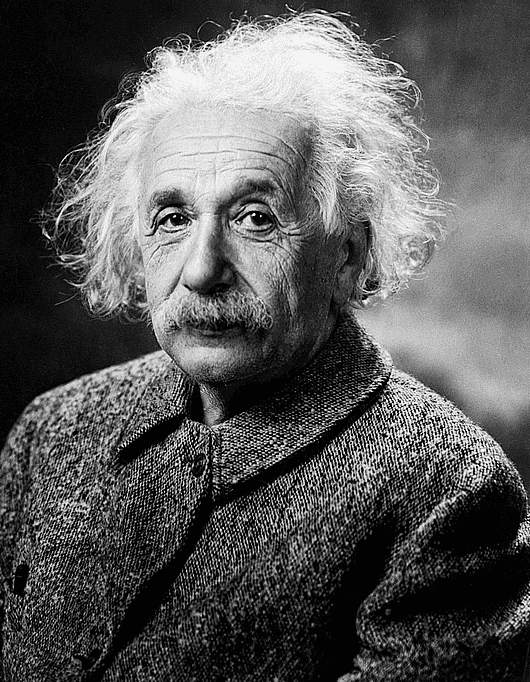
"This topic brings me to that worst outcrop of herd life, the military system, which I abhor... This plague-spot of civilization ought to be abolished with all possible speed. Heroism on command, senseless violence, and all the loathsome nonsense that goes by the name of patriotism -- how passionately I hate them!
"The most beautiful experience we can have is the mysterious. It is the fundamental emotion that stands at the cradle of true art and true science. Whoever does not know it and can no longer wonder, no longer marvel, is as good as dead, and his eyes are dimmed. It was the experience of mystery -- even if mixed with fear -- that engendered religion. A knowledge of the existence of something we cannot penetrate, our perceptions of the profoundest reason and the most radiant beauty, which only in their most primitive forms are accessible to our minds: it is this knowledge and this emotion that constitute true religiosity. In this sense, and only this sense, I am a deeply religious man... I am satisfied with the mystery of life's eternity and with a knowledge, a sense, of the marvelous structure of existence -- as well as the humble attempt to understand even a tiny portion of the Reason that manifests itself in nature."
By Albert Einstein
1 – Name the 5 richest people in the world.
2 – Name the last 5 Miss Universe winners.
3 – Name the last 10 Nobel Prize winners.
4 – Name the last 10 winners of the Best Actor Oscar.
Can’t do it? Rather difficult, isn’t it?
Don’t worry, nobody remembers that.
Applause dies away!
Trophies gather dust!
Winners are soon forgotten.
Now answer these questions:
1 – Name 3 teachers who contributed to your education.
2 – Name 3 friends who helped you in your hour of need.
3 – Think of a few people who made you feel special.
4 – Name 5 people that you like to spend time with.
More manageable? It’s easier, isn’t it?
The people who mean something to your life are not rated “the best”, don’t have the most money, haven’t won the greatest prizes…
They are the ones who care about you, take care of you, those who, no matter what, stay close by.
Think about it for a moment.
Life is very short!
And you, in which list are you? Don’t know?
For the longest time, it seemed that life was about to start. Real life. But there was always some obstacle along the way, an ordeal to get through, some work to be finished, some time to be given, a bill to be paid. Then life would start. I finally came to understand that those obstacles were life.
That point of view helped me see that there isn’t any road to happiness. Happiness IS the road.
So, enjoy every moment.
Stop waiting for school to end,
for a return to school,
to lose ten pounds,
to gain ten pounds,
for work to begin,
to get married,
for Friday evening,
for Sunday morning,
waiting for a new car,
for your mortgage to be paid off,
for spring,
for summer,
for fall,
for winter,
for the first or the fifteenth of the month,
for your song to be played on the radio,
to die,
to be reborn… before deciding to be happy.
Happiness is a voyage, not a destination.
There is no better time to be happy than… NOW!
Live and enjoy the moment.
-Author unknown
Now question is what is more necessary in this world ?
My belief about this can be easily understood from the following line:
"Logic can take you from A to B, but Imagination can take you anywhere "
From my childhood, I had a belief that logic is very important for a person to succeed in any task.This is very true but to some extent.
I have experienced some inexplicable experiences which taught me that our mind has a power to achieve what it can imagine(if you want it deep from your heart).But it must not be harmful to others.You can try this out and put your comments out here.
Logic can give you the answer about everything that is present,but new discoveries cannot be made with the help of a logic.Imagination helps you think about anything and everything , even if it's not present.Sometimes I believe one should not be rational and practical,but try to think out of the box and set one's imagination free , as it can create wonders.Open mindedness can help human to achieve great heights.But I think open mindedness is directly related to our imagination.
I will give you some quotes by renowned Philosopher cum Scientist Albert Einstein:
“Imagination is more important than knowledge. For knowledge is limited to all we now know and understand, while imagination embraces the entire world, and all there ever will be to know and understand.”
“Imagination is everything. It is the preview of life's coming attractions.”
So now What should we do?
I will suggest the following :
Follow your logic(brain) for all the tasks pertaining to your academics ,while follow your imagination(heart) while taking any decisions pertaining to your life.
Above article is just my belief,you have all rights to comment against me,if you don't like my post.But if you like the post you can always comment and share your experience or beliefs.

I remember that my barber worked day and night so that his daughter could finish her degree in sociology. She managed to finish university, and after knocking on many a door she finally found a job working as a secretary in a cement company. Even so, my barber always said with pride: “My daughter has a university degree.”
Most of my friends, and the children of my friends, also have a university degree. That does not mean they have managed to work at what they wanted - quite the contrary, they entered and left university because - at a time when universities were important - someone said that for a person to get anywhere in life, they had to have a university degree. And so the world missed out on having excellent gardeners, bakers, antique dealers, sculptors and writers. Maybe it is time to look at this again: doctors, engineers, scientists, lawyers, they all have to study at university. But does everyone else? I shall let Robert Frost’s poem give the answer:
I read the above lines in Paulo Coelho's book "Like the Flowing River"
According to Wikipedia,"Although it has not been pinpointed exactly, evidence suggests that life on Earth has existed for about 3.7 billion years."
This is just the microorganism , but humans actually came into existence much later.According to scientific proofs , our last known civilization is not even 12,000yrs old. And humans evolved from apes,a few million years ago.
But how far this is true?
The Bible tells us that God created Adam and Eve just a few thousand years ago, by some fundamentalist interpretations.
Recently, I came across few sites, where they have described about the artifacts and proofs that are much older then our own civilizations. I am showing you some of them out here.
But question is What's the truth?
Could it be that conventional science is just as mistaken as the Bible stories? There is a great deal of archeological evidence that the history of life on earth might be far different than what current geological and anthropological texts tell us.
Grooved Spheres:
Impossible Fossils:
The Antikythera Mechanism:
Giant Stone Balls of Costa Rica:
Ancient Coin from Illinois:
Evidence of Human and Dinosaur Footprints Found on the Same layer of rocks. If you are interested to know more go to the sites I have given below.
I have given just a few evidences, here's a lot more to read and ponder about.
If you like or dislike anything regarding this post you can leave your comment and share your views with us.
http://www.forbiddenarcheology.com/
http://www.creation-vs-evolution.us/visual-evolution/human-footprints/
http://paranormal.about.com/od/ancientanomalies/ig/Most-Puzzling-Ancient-Artifact/
Recently I thought about the changes that is taking place in the world:--
1) Global warming (pollution) is on the rise.
2) Technological and scientific progress is taking place (APPARENT).
3) Religious and Spiritual beliefs are deteriorating.
4) People spending more time on computers and other gadgets.
5) People are trying to achieve more and more but in the materialistic world.
6) Great people (I mean "GREAT") are not visible now a days, rather criminals("......") are becoming famous.
7) Relationships among people is not that stable.
8) Free thinking has nearly vanished or rather i will tell that even people who are thinking , don't have platform to express there thoughts.
There are numerous of such changes...............
Above are just the changes i have noticed, but i may be wrong on certain points so i would rather ask you to give your comments on the topic.
Few related articles :
Why can't we concentrate?
Twitter and e-mail aren't making us stupider, but they are making us more distracted. A new book explains why learning to focus is the key to living better.By Laura Miller
Here's a fail-safe topic when making conversation with everyone from cab drivers to grad students to cousins in the construction trade: Mention the fact that you're finding it harder and harder to concentrate lately. The complaint appears to be universal, yet everyone blames it on some personal factor: having a baby, starting a new job, turning 50, having to use a Blackberry for work, getting on Facebook, and so on. Even more pervasive than Betty Friedan's famous "problem that has no name," this creeping distractibility and the technology that presumably causes it has inspired such cris de coeur as Nicholas Carr's much-discussed "Is Google Making Us Stupid?" essay for the Atlantic Monthly and diatribes like "The Dumbest Generation: How the Digital Age Stupefies Young Americans and Jeopardizes Our Future," a book published last year by Mark Bauerlein.
click here for more
Another article
Too Much Technology Can Be Harmful
Alex Sanders
Life seems so much better without hassle, but it isn't necessarily - it could be worse. For example, many people use credit cards on a daily basis simply because it's easy. Whether they don't have time to go to an ATM or the line is moving quickly and money will take time to count, people seem to rely on credit cards. However, they can also end up in severe debt because of that dependence. Technology is akin to credit cards in the way that it certainly makes life easier but it isn't good on the wallet, the mind or the body.
Our parent's generation would have to walk to the library, actively search for books for a school project then walk home. These days, students spend an exorbitant amount of time glued to a computer screen with numerous distractions like Facebook and MySpace. This lethargy prevents people from getting exercise for their bodies or brains. Reading a book requires thinking and looking up information as opposed to mindlessly clicking through white screens. Even Disney World is adding virtual aspects to their park. There will soon be more technology than actual characters walking around the park. People prefer to go see high-tech laser shows rather than Mickey Mouse, the original main attraction.
Click here for more
The way we use our computers also has an impact. According to Google, the production of the electricity needed for a single internet search generates 200 milligrams of CO2. This may not sound much, but it adds up: 1000 searches produce the same CO2 emissions as an average European car travelling 1 kilometre. Worse, internet traffic is currently growing at around 50 per cent each year. According to the international environmental coalition The Climate Group, total emissions from computers will increase by 280 per cent, to the equivalent of 1.4 gigatonnes of CO2, by 2020.
To read More Click here
There was a boy who loved eating sweets. He always asked for sweets from his father. His father was a poor man. He could not always afford sweets for his son. But the little boy did not understand this, and demanded sweets all the time.
The boy's father thought hard about how to stop the child asking for so many sweets. There was a very holy man living nearby at that time. The boy's father had an idea. He decided to take the boy to the great man who might be able to persuade the child to stop asking for sweets all the time.
The boy and his father went along to the great man. The father said to him, "O great saint, could you ask my son to stop asking for sweets which I cannot afford?" The great man was in difficulty, because he liked sweets himself. How could he ask the boy to give up asking for sweets? The holy man told the father to bring his son back after one month.
During that month, the holy man gave up eating sweets, and when the boy and his father returned after a month, the holy man said to the boy "My dear child, will you stop asking for sweets which your father cannot afford to give you?"
From then on, the boy stopped asking for sweets.
The boy's father asked the saint, "Why did you not ask my son to give up asking for sweets when we came to you a month ago?" The saint replied, "How could I ask a boy to give up sweets when I loved sweets myself. In the last month I gave up eating sweets."
A person's example is much more powerful than just his words. When we ask someone to do something, we must do it ourselves also. We should not ask others to do what we do not do ourselves.
MORAL: Always make sure that your actions and your words are same
Human beings consider ourselves to be a very intelligent species. Our ingenuity has conceived and built several systems constituting family, social, religious, political, economic and industrial networks. Our success in these endeavors has brought them tremendous material success. Humans have built homes and palaces to live in, towns and cities for shelter; and roads, cars, trains, ships, and airplanes for transportation. But along the way, development in the name of survival has changed to development as a way to “have” more -- to fulfill a seemingly insatiable need.
Humans have exploited the oceans and streams for fish, land for nature’s mineral resources, and forests for vast quantities of timber. The slaughter of fish and wildlife has become entertainment. No other species kills other living beings just for fun or the pleasure of the palate, and none soils its own nest. Our machines and factories have created still more wealth. So successful has been human inventive genius that soon we even invented an omnipotent God and started fantasizing himself to be in our image.
Such fantasy might have been acceptable but for the terrible record of human species. No other species has developed weapons of mass murder and accepted genocide, religious and ideological wars, empire building, colonization, and subjugation. Yet, here too, human genius is at work! We invented even a devil to absolve ourselves of all our evil acts and to whom we can assign blame. Man is an intelligent genius indeed!
Little do we understand that no one but our self is responsible for our acts….that the devil and godliness are both within us! Our soul, if pure, is godly but we also harbour the devil in the form of our passions. We are so egotistic and self-righteous that we have no respect for other living beings.
Our self-righteousness makes us believe that our race, our religion, our nation, and our political systems are so superior that we have the right to impose our authority and will on others, or kill other living beings for profit, food, pleasure, or fun. Our ego and cruelty has made us insensitive to the pain we inflict on animals. We wage wars, and build war academies to turn young minds in to killing machines.
We have amassed enough nuclear weapons to blow up our planet with the flick of a switch. Aren’t these devilish acts? Yet, amazingly, we see ourselves as the most intelligent species!
Our desires have no limits. We designed animal farms for the mass production of animals for slaughter, and trawlers to catch millions of fish in one sweep. Make no mistake – these “farms” are not the idyllic settings of Charlotte’s Web, they are factory-like farms where thousands of cows, pigs, chickens, etc. are stuffed in small cages for all their short lives, fattened prematurely, pumped with drugs, and slaughtered for humans.
A 2006 United Nations report concludes that animal farming and animal consumption have the most devastating effect on our environment. The world is currently raising over 50 billion farmed animals for slaughter each year. This contributes significantly to the destruction of forests, extinction of plant and animal species, soil erosion, pollution of ground water, and depletion of fresh water and arable land. Animal farming contributes significantly to the greenhouse gases – carbon dioxide, methane, and nitrous oxide (9%, 37%, and 65% of world totals, respectively) – of which methane and nitrous oxide are 23 and 296 times more detrimental to global warming than carbon dioxide.
To make the matters worse, we are rapidly stripping our rain forests to acquire more land for providing animal feed for these animal farms. These trees not only provide habitat for several species of birds, animals and insects, but also act as a carbon dioxide sink, converting greenhouse gases into needed oxygen. With the forests depleted, global warming accelerates. Additional greenhouse gases come from our cars, factories, oil and coal burning, and energy consumption.
Between 1970 and 2004 the greenhouse gases rose by 70 per cent from 28.7 to 49 billion tons per year. Global temperatures have risen by 0.74C in less than a year and have hastened melting of the polar icecaps. Scientists predict that a two-degree increase in global temperature will raise sea levels enough in few short years to submerge many costal areas and cities. The devil in us must be working overtime!
Signs of inevitable disaster are everywhere, but can we do anything about it? Can we stop the devil in its tracks? Politicians and scientists are now scrambling to prevent greenhouse gas emissions by asking car drivers, energy producers, and factories to cut down their emissions, yet any suggestion to curb animal farming and meat production meets with deafening silence. Nevertheless, such measures, though beneficial, are really only temporary. Ultimately the solution lies in dealing with our internal devil and its insatiable greed.
As many as 2600 hundred years ago, Mahavir, the 24th Jain Tirthankara issued a warning. He asked us to respect the environment. In keeping with his message of non-violence, he preached that air, water and soil are all living systems, and man will abuse them only at his own peril. Jains may have received this message with lukewarm enthusiasm (devil pervades every soul), but still try to live by Mahavir’s message. The rest of the world, however, has so far given it the cold-shoulder.
The Tirthankaras actually identified this devil and even have a name for it. They call it “Kashayas”. Passions such as ego, greed, lust, anger, self-righteousness, power hungriness, jealousy, etc. are the kashayas. The Tirthankaras preached that every pure soul is divine but the kashaya-devil has imprisoned our soul and has somehow managed to overpower our conscience - the God within us. They developed a philosophy and a practical, workable technique not only to control this devil but also to get rid of it. They tell us that if we eliminate our kashayas and liberate our mindset from this devil, our soul will be free and godliness is ours! It is our mindset that keeps the soul imprisoned, and we need a fundamental change in our mindset to be able to free ourselves and our planet from the devil.
The Tirthankaras preached a set of beliefs to prepare us to follow a path to gradually eliminate the kashayas. In this sense, Jainism is more of a psychological system to overcome human weaknesses, than a religion. Its theoretical construct is founded on liberating the human mind from its dependence on an external imaginary God and devil, and empowering it to shape its own destiny.
Its basic message is “All living beings are, in essence, impure souls trapped in a continuous cycle of rebirth and death due to their own doing (karma), and have the potential to liberate themselves. Humans in particular have the ability to liberate their soul by their own actions if they so choose. We are the masters of our destiny and can expel the devil within us to achieve the divine state of omniscience, omnipresence and omnipotence.”
Jainism has developed three main doctrines to prepare the right mindset for the journey on the path to achieve moksha – the state of divinity. These are:
Triple ‘A’s OR Triple ‘R’s
Ahimsa Reverence for ALL living beings
Anekantawada Respect and examine the validity of differing viewpoints
Aparigraha Reduce your needs and possessions
It is not too hard to imagine how these doctrines, if applied globally, can alleviate most of the problems facing our planet such as violence, wars, fundamentalism, terrorism, and environmental decay. The Jain scriptures emphasize that even the intention of violence (bhava himsa) is a serious act of violence.
Such emphasis, and their unique doctrine of Anekantawada has had a great impact on the psyche of the Jain community. This impact has resulted in the formation of a peaceful community, which has adhered to these three doctrines for thousands of years.
The Jain doctrine of ahimsa has even influenced a large number of Hindus (particularly “upper caste” Hindus) to abandon their practice of animal sacrifices and become vegetarians.
Apart from the issues such as ‘cruelty to the animals’ and ‘effect of carnivorous habits on human health’, vegetarianism has gained crucial importance in the 21st century.
The most inconvenient truth is that a global shift away from meat and other animal products (understand Ahimsa), so also from self-righteousness (understand Anekantawada), and from a lifestyle of increasing needs and possessions (understand Aparigraha) is urgently needed to save the planet from rapidly growing greenhouse gases. Without such a massive shift in human mindset, the kashaya-devil will have free hand with its ‘intelligent ingenuity’.
The history of Jain community suggests that their triple ‘A’s have been effective in bringing about massive change in the human mindset to create a peaceful community. Jains have inherited these three ‘A’s and have used them for centuries. They must now bring their long-standing know-how in these techniques to the attention of the world. Not doing so will only strengthen the hands of the devil. I implore Jains to be proactive not only to help world breathe easy, but also to restore the lost glory of Jainism.
Source: Professor Vastupal Parikh, Ph.D - contact
Jin agna viruddh kai pan lakhayu hoi to micchami dukkdam
1: Greed and Instant Gratification
2: A Lack of Definite Purpose in Life
3: Lacking Confidence in Yourself
4: Not Willing to Pay the Price for Your Dreams
5: Giving Up Without a Fight
6: Not Willing to Take Calculated Risks
7: Not Taking Action
8: Not Taking Responsibility
9: Negative Thinking
© Copyright INFINITY. All rights reserved.
| Bloggerized by FalconHive.com